Verity (2026) Review: Anne Hathaway Saves a Flat Thriller — Colleen Hoover's Bestseller Gets a Faithful, Oddly Tame Adaptation
Michael Showalter's adaptation follows the novel almost page for page. Critics found it too cautious to be the trashy good time the material promises, and nearly all of them made an exception for its star.
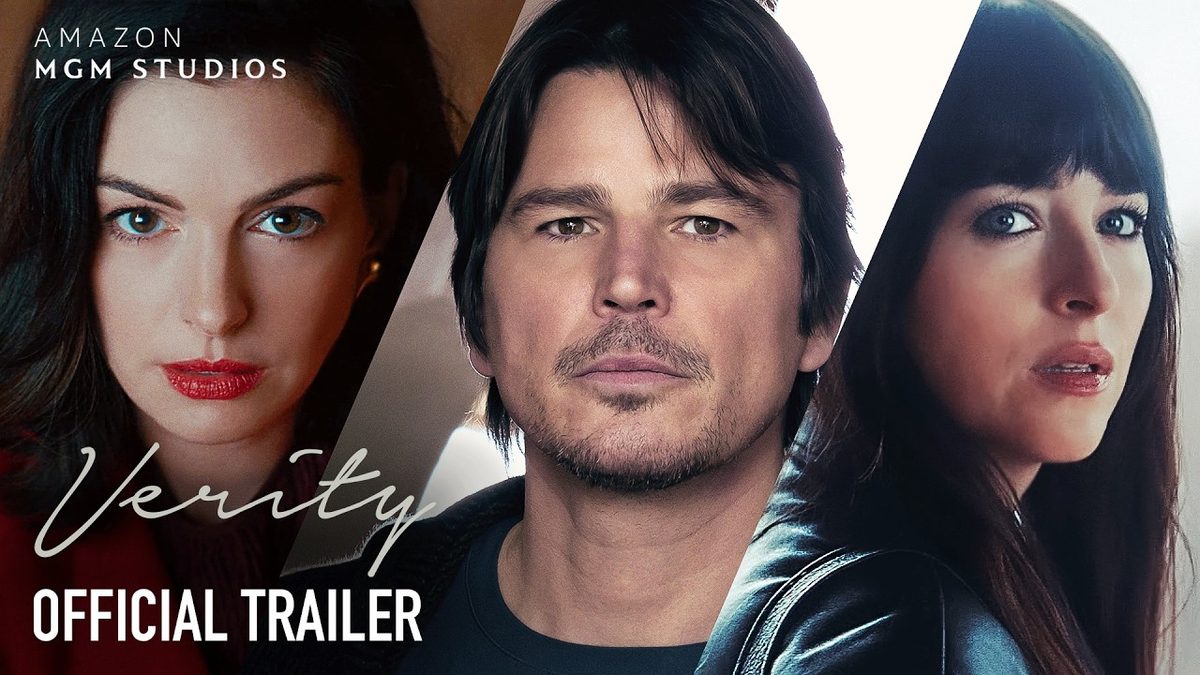
Verity arrives with an audience already waiting for it. Colleen Hoover's 2018 novel is the darkest book in her catalogue, a psychological thriller rather than a romance, and it is the fourth of her books to reach the screen. Amazon MGM Studios opened the film in U.S. theaters on October 2, 2026, with Michael Showalter, the director of The Big Sick and The Idea of You, working from a screenplay by Nick Antosca. It is rated R for sexual content, language, bloody images, some nudity and violence, and it runs a little under two hours.
The setup is easy to describe without giving anything away. Lowen Ashleigh (Dakota Johnson) is a writer with money problems and no momentum when she is offered the job of a lifetime: finishing the bestselling book series of Verity Crawford (Anne Hathaway), who has been left unable to work after an accident. Verity's husband, Jeremy (Josh Hartnett), invites Lowen to stay at the family's house and go through his wife's notes. In the office she finds a manuscript that was never meant to be read, an autobiography that describes the Crawfords' marriage and the family's losses in terms that make Lowen afraid of the woman lying upstairs. At the same time she is falling for Jeremy. That is the whole engine, and it is all in the trailer.
The critical numbers are poor. As of October 3 the film sits at 34% on Rotten Tomatoes from 126 reviews and at 45 on Metacritic from 32 critics, a score Metacritic labels "mixed or average"; of those 32 reviews, five are positive, nineteen mixed and eight negative. The audience number tells a different story. Rotten Tomatoes' verified-audience Popcornmeter stands at 71%, a gap of 37 points. A split that size usually means a film is giving its intended audience what it came for while failing to persuade anyone else, and the reviews bear that out.
The most common complaint is not that Verity is trashy but that it is not trashy enough. Hoover's book is built on sex, obsession and twists that dare you to keep a straight face, and several critics argue the film handles that material with oven gloves. Collider's Carly Lane writes that it "isn't nearly as creepy, campy, or sexy as it could have — and should have — been." Peter Gray of The AU Review says Showalter "gets tantalisingly close to embracing that trashy potential, but too often pulls back when he should be pushing harder." Digital Spy's Ian Sandwell thinks it "could have succeeded as a throwback '90s thriller" but that the director never settles on a tone, "and it's often dull as a result." Slashfilm's Nina Starner is harsher still, calling it "barely a movie; it's a series of montages in which beautiful people whisper at each other."
Part of that caution comes from loyalty to the source. Reviewers who know the book agree the film follows it closely, and they disagree about whether that is a virtue. FlickDirect's Allison Rose calls the fidelity "both a blessing and a curse," adding that the film "seems a little too long as he tries to fit in as much as possible to appease Hoover's fans." Starner makes the same point from the other side: "There's little to no deviation, which leaves very little room for Showalter to have any fun here." Mashable's Kristy Puchko describes Antosca's script as "a color-by-numbers psycho-sexual thriller." For a reader who wants to see the novel on screen, scene by scene, this is the best news in the reviews. For anyone else it explains why a story this lurid plays so carefully.
Then there is Anne Hathaway, and here the reviews turn almost unanimous. She plays Verity largely through the manuscript's flashbacks, as the narrator of her own worst behaviour, and she plays it big. Awards Watch's Sophia Ciminello calls it "a diva turn with hilarious, icy line readings," and compares it to Meryl Streep's Miranda Priestly. Lane writes that Hathaway "impeccably walks this tightrope between master manipulator and tragic figure." Next Best Picture's Dan Bayer, who did not like the film, says she is "sharp enough to cut through the mediocre muck surrounding her" and is "reason enough to see the film, even if the rest of it leaves a lot to be desired." Even Starner's pan stops to say that Hathaway "really is one of the greatest performers of our time." The one dissenting note comes from a positive review: Screen Rant's Liz Declan finds the performance occasionally "a bit too grandiose or overdone, particularly in voiceover scenes."
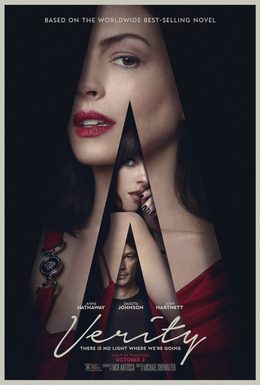
The problem is that Hathaway is not the lead. Structurally this is Lowen's story, and most of the running time belongs to Johnson and Hartnett, whose characters have to fall for each other for the plot to work. Critic after critic says they do not. Puchko writes that Johnson "has no chemistry with Hartnett or Hathaway, making the love triangle element fall flat." Rose thinks the three stars "seem to be in three different stories in the same film." Sandwell puts the consequence plainly: "The more that Lowen and Jeremy take center stage, the less interesting that the movie becomes," and he adds that Hathaway "deserved to be in it a lot more than she is." Variety's review, headlined "a limp thriller," argues that Showalter shows no feel for the erotic-thriller genre at all, which is a real handicap in a film with this many sex scenes.
Two things in the film draw praise from people who otherwise disliked it. One is the house. Bayer calls the Crawford home "one of the year's great production-design achievements, with rounded rooms, floor-to-ceiling windows, and impossibly long hallways," and Rose singles out the snow-covered landscape around it. The other is the comedy, some of it intended. HeyUGuys' Linda Marric, one of the film's warmest reviewers, says that "few thrillers wear their silliness as proudly as Verity, and thankfully director Michael Showalter is in on the joke," and Puchko notes that "Hathaway is keenly hilarious, and she knows it." Ciminello is less sure the laughs are deliberate but thinks it hardly matters: "That failed seriousness is what makes Verity so much fun to watch with a crowd."
The comparisons critics reach for are useful if you are deciding whether this is your kind of film. Gone Girl comes up constantly, usually to Verity's disadvantage: Bayer says the adaptation "plays out like a good girl doing her best Gone Girl impression." The closer match is last year's The Housemaid, another glossy thriller about a woman who takes a job in a house full of secrets. Gray thinks The Housemaid "understood the value of throwing good taste out the window" in a way this film does not, while Marric argues Verity is "the sharper, better-made film." Against Hoover's other adaptations it does better. Ciminello calls it "the best Hoover adaptation to date," Declan says that claim "wouldn't be unreasonable," and Lane writes that "as CoHo adaptations go, it's definitely leading the pack."
The ending will be argued about, which is what the book's ending is famous for. Without describing it: the film keeps the novel's final reveal, and the reviews split on whether it works. Rose says it "will keep people talking." Sandwell says it "might leave you debating on the way home, if only to try and work out if it even makes sense." Marric, who enjoyed nearly everything before it, found that the conclusion "feels rushed" and "comes across as an ending that has been hurried into place." If you have not read the book, that is a reason to see the film early and stay away from discussion of it until you have.
None of this is likely to hurt it commercially. Variety projects an opening weekend of $30 million to $35 million in the U.S. and Canada from 3,510 theaters, enough to finish first, against a reported production budget of $40 million. That puts it well ahead of the weekend's other new wide release, Digger, which The Hollywood Reporter says took in $1.2 million in Thursday previews. Hoover's readers have turned up for every one of these films regardless of reviews, and the audience score suggests the ones who went on opening night got what they wanted.
Our verdict: Verity earns a FilmRated Score of 46 out of 100. That sits just above its critic scores and well below its audience score, and the reason is specific. One performance in it is worth the ticket, and the film around that performance is slow, cautious and short on the heat its story depends on. See it in a full theater if you loved the novel, if you enjoyed The Housemaid or A Simple Favor, or if you want to watch Anne Hathaway have more fun than anyone else on screen this month. If you are hoping for a thriller with the nerve of Gone Girl, this is not it, and it will lose little when it reaches streaming.
Related movies
Related articles
- Digger (2026) Review: Tom Cruise Is All In; the Film Isn't — Iñárritu's Big, Messy Dr. Strangelove Riff
- Practical Magic 2 Review: The Spell Doesn't Quite Hold — the Owens Sisters Return
- Anne Hathaway and Dakota Johnson Star in Verity, Amazon MGM's Adaptation of Colleen Hoover's Bestseller, Out October 2
- Spider-Man: Brand New Day (2026) Review: Holland's Best — a Spider-Man Movie That Grows Up With Him
Sources
- Rotten Tomatoes: Verity (2026) — Tomatometer and Popcornmeter, checked October 3, 2026
- Metacritic: Verity — Metascore and review breakdown, checked October 3, 2026
- Rotten Tomatoes Editorial: Verity First Reviews (September 30, 2026)
- Variety: 'Verity' Review: Dakota Johnson and Anne Hathaway in a Limp Thriller
- Variety: Verity box office opening weekend projection
- The Hollywood Reporter: 'Digger' Unearths $1.2M in Box Office Previews
- Wikipedia: Verity (film) — cast, production, release
- Amazon MGM Studios: Verity — Official Trailer