Forgotten Island Review: DreamWorks Finds Its Best Film in Years by Trusting Filipino Folklore, Not Formula
Directors Joel Crawford and Januel Mercado fold 2D anime energy into 3D animation and let a real, messy friendship carry the whole movie
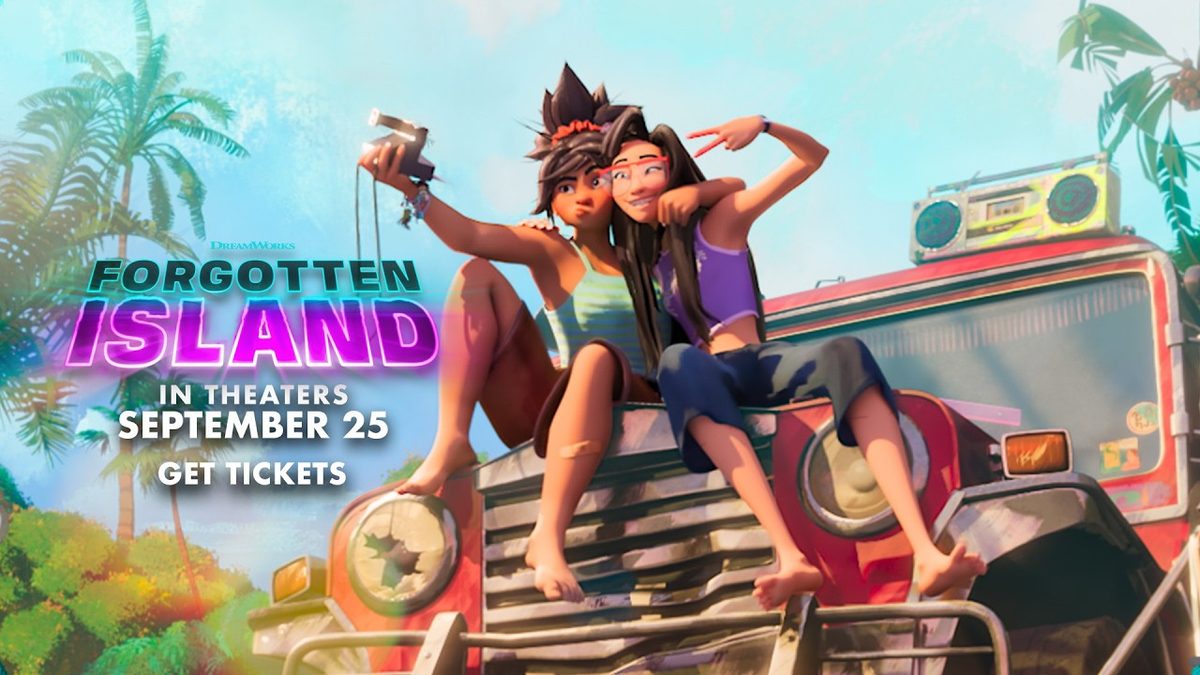
Forgotten Island opens in the 1990s Philippines with two teenagers, Jo Fatima and Raissa Molina, who have spent their whole friendship trading stories about local folklore — the kind of shared obsession that feels like its own private language. The night before Raissa is set to leave for a scholarship at Caltech, a secret she never told Jo, a portal opens onto the mythical island of Nakali. The girls wake up back home with no memory of what happened there, and have to retrace their steps to reopen the portal before Raissa's flight — except getting home again means giving up every memory they have of each other.
That's a genuinely unusual premise for a studio animated adventure aimed at families, and directors Joel Crawford and Januel Mercado (the team behind Puss in Boots: The Last Wish) don't soften it into something safer. The film is willing to sit with the real mess of a friendship between two people who are, in different ways, both right and both wrong — Raissa for keeping a life-changing secret, Jo for how she reacts to finding out. Neither girl gets let off the hook, and neither becomes the villain of the other's story, which is a harder needle to thread than it sounds.
Voice work from Liza Soberano and H.E.R. is doing real work here, not just line-reading — both performances carry the specific ache of watching a friendship change shape faster than either person can process. Dave Franco's comic-relief were-dog Raww could have been a pure gag character, but the film gives him his own real insecurity underneath the jokes, and the same is true down the supporting cast: Manny Jacinto, Jenny Slate, and Lea Salonga all get moments where their characters' fear of being left behind pokes through the comedy, rather than existing purely to serve the leads.
The most striking thing about Forgotten Island, though, is what it looks like. Crawford and Mercado fold real 2D anime language — the kind of hard-edged, high-energy poses you'd recognize from Dragon Ball or Sailor Moon — directly into the film's 3D, paint-textured animation style, and it never reads as a gimmick bolted on for a cool trailer moment. It's an extension of how the characters are feeling in a given scene: the anime-style beats show up when emotion outruns realism, the same way a manga panel blows past its own borders for a big moment. DreamWorks has been visibly trying to shake its house 3D style loose in recent years — The Bad Guys, The Wild Robot, Dog Man, Puss in Boots itself — and this is the most fully realized version of that experiment yet.
The film's commitment to real Filipino cultural specificity — the jeepney as a genuine, lived-in piece of setting rather than set dressing, composer Nathan Matthew David's score, the texture of Nakali's folklore pulled from actual Philippine mythology rather than a generic fantasy-island grab bag — is exactly the kind of detail that critics have singled out as the difference between a movie that uses another culture as a backdrop and one that's actually built from it. It plays as more accessible for that specificity, not less, the same paradox that's carried films like Coco and Encanto to broad audiences.
None of this is to say the film is flawless — animated adventures built around "we have until sundown" stakes can start to feel like a checklist of set pieces strung between emotional beats, and Forgotten Island isn't wholly immune to that rhythm in its middle stretch. But the destination earns the trip: the finale asks Jo and Raissa what a friendship is actually worth if neither of you remembers it, and the film has done enough real work by then that the answer lands as earned rather than manipulative.
It's worth noting, honestly, that critical acclaim this strong hasn't translated into a big opening at the box office — Forgotten Island has underperformed commercially relative to its reviews, which is its own small tragedy for a movie this genuinely ambitious. If word of mouth catches up with the reviews over the following weeks, it deserves to. This is DreamWorks doing something it hasn't done in a long time: trusting a story specific enough that it could only be this story, instead of reaching for the widest possible net.
Related movies
Sources
- 'Forgotten Island' Review - One of DreamWorks' Finest to Date — DiscussingFilm
- 'Forgotten Island' Review: H.E.R. & Dave Franco Voice DreamWorks Animation Film — Deadline
- Forgotten Island — Rotten Tomatoes
- Forgotten Island — Metacritic
- One Of The Most Acclaimed Animated Movies Of 2026 Flopped At The Box Office — SlashFilm