Resident Evil Review: Zach Cregger Finally Cracks the Video-Game Movie Curse
After six Paul W.S. Anderson films built around Milla Jovovich's Alice, Sony handed the reboot to the director of Barbarian and Weapons — and the reviews say it worked.
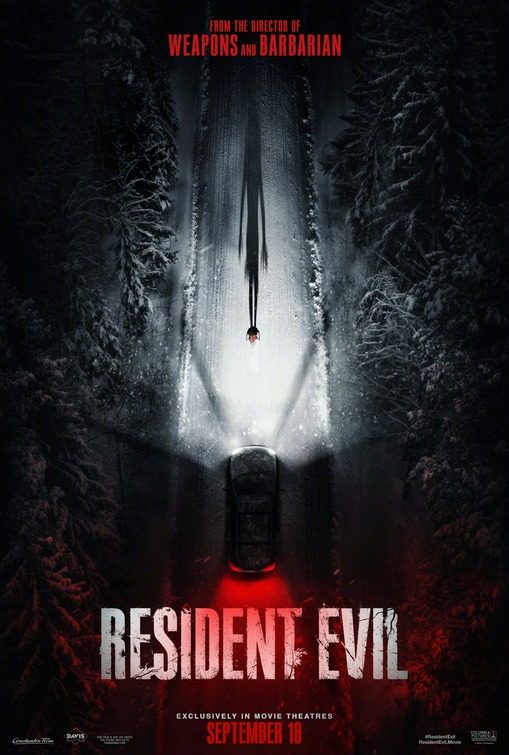
Video-game movies have a specific, well-earned reputation, and the Resident Evil franchise did as much as anything to build it: six Paul W.S. Anderson-directed films between 2002 and 2016, campy and commercially durable but never taken seriously as horror. Sony's 2026 reboot starts over completely, handing the keys to Zach Cregger, the director who turned Barbarian and Weapons into two of the most talked-about horror films of the past few years. That pedigree alone made this the most-watched video-game adaptation in years before a frame had screened.
The setup strips the mythology back to something closer to the original 1996 game than any prior film attempted: Bryan (Austin Abrams), a medical courier, gets pulled into an Umbrella Corporation containment breach during one collapsing night, thrown together with strangers including an Umbrella scientist (Zach Cherry) and an Umbrella enforcer (Kali Reis) who both know more about what's loose than they're willing to say. Cregger and co-writer Shay Hatten keep the scope tight and the geography legible — a real departure from the globe-trotting, lore-heavy later Anderson films.
At 94 minutes, this is a lean film by modern horror-blockbuster standards, and that tightness is doing real work: critics have repeatedly singled out how efficiently it packs its scares into a sleek runtime rather than padding toward a bloated two hours. Cregger's Barbarian-honed instinct for when to hold a shot and when to cut away shows up throughout, and the practical-effects-forward creature work gives the film a tactility that CGI-heavy franchise horror often loses.
Austin Abrams carries the film's comedic timing — a needed pressure valve in a story that could otherwise be unrelenting — while Paul Walter Hauser and Kali Reis anchor the more grounded, human stakes. It's an ensemble built around reaction and survival rather than a single action hero, closer in spirit to Cregger's other work than to the Milla Jovovich-led films this reboot is quietly replacing.
The numbers back up the buzz: a 96% Tomatometer score from 263 critics (7.7/10 average) and a Metacritic score of 79 from 51 critics, landing in "generally favorable" territory. Rotten Tomatoes' own critics roundup went further, calling it not just the best Resident Evil movie but one of the best video-game movies made to date — and multiple outlets have noted it's now the highest-rated film based on a video game on both Rotten Tomatoes and Metacritic, a genre that has historically struggled to clear 50% on either aggregator.
Audiences agreed at the box office before the reviews even had time to settle: a $60 million domestic opening weekend, comfortably ahead of pre-release tracking in the $40-50 million range and the biggest debut the Resident Evil franchise has ever had by a wide margin. A CinemaScore of B+ — the highest any Resident Evil film has received — suggests the people who bought tickets left satisfied rather than just curious, and the film has gone on to gross $196.5 million worldwide against a reported $75 million budget.
What separates this from the Anderson-era films isn't really the mythology changes, though returning to something closer to Bryan's ordinary-guy perspective helps. It's that Cregger approaches the material as horror first and franchise-maintenance second — the same instinct that made Barbarian's midpoint swerve work is what keeps this from ever feeling like it's just servicing IP. For a genre of film that's spent two decades being treated as a punchline, that's not a small thing.
Whether Sony builds a new multi-film universe around this version of Umbrella's outbreak or treats it as a self-contained reinvention, the reception here — critical and commercial both — gives them a real foundation to work from, which is more than most video-game franchises have managed on their first, second, or sixth attempt.