Musk (2026) Review: A 4-Hour Indictment, Hurt by Gimmicks — Alex Gibney's Documentary Is Comprehensive and Damning, Except When It Reaches for a Digital Elon Clone
Oscar winner Alex Gibney spends nearly four hours tracing how Elon Musk accumulated the power he now holds — and the film is most convincing exactly where it trusts its own reporting.
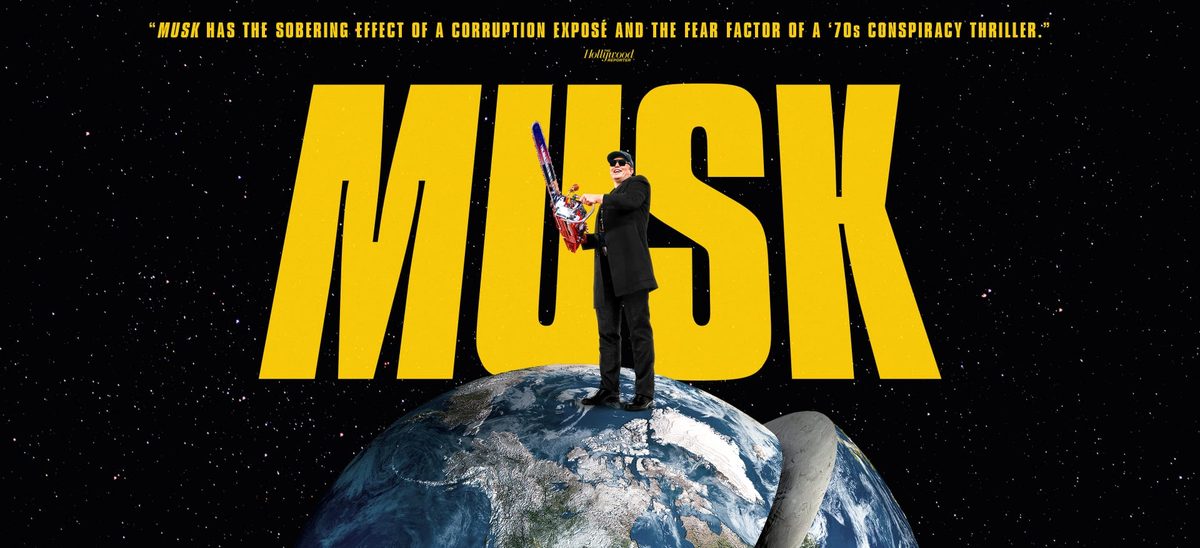
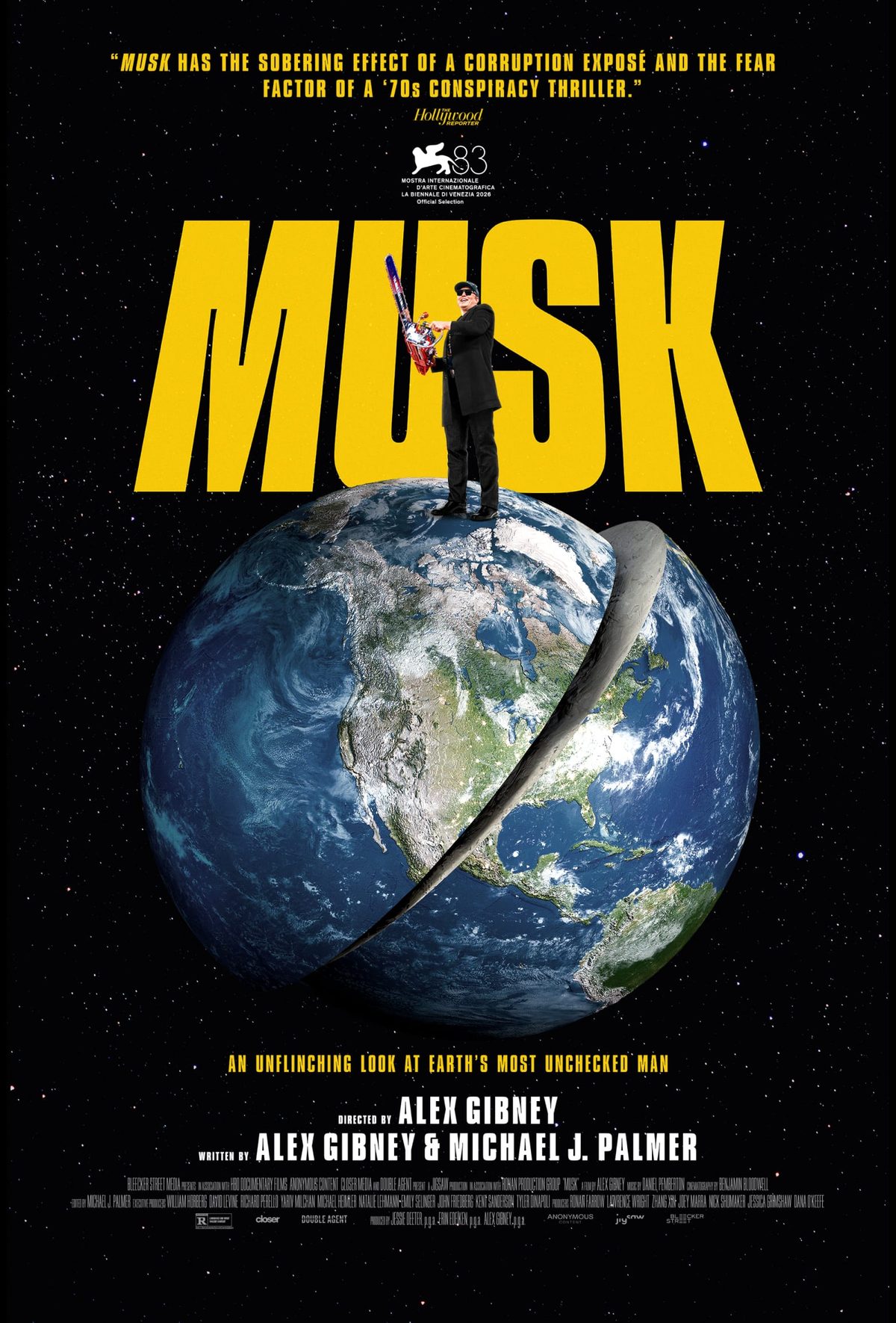
Alex Gibney has made a career out of exhaustive, damning documentaries about powerful men and the systems that let them stay powerful — Enron, Scientology, Theranos — and Musk, which premiered out of competition at Venice to a four-minute standing ovation before opening in limited release via Bleecker Street on October 9, is his biggest subject yet by sheer scale. At 235 minutes, the film isn't shy about its own ambition: this is an attempt at a complete account of how a South African-born entrepreneur became one of the most powerful private individuals on earth, not a highlight reel.
The structure moves roughly chronologically, from Musk's dot-com-era Silicon Valley beginnings through PayPal, Tesla and SpaceX, and into the present, where his wealth translates directly into political influence. Gibney interviews a wide bench of people who were actually there: ex-wife Justine Musk, journalist Kara Swisher, Tesla co-founder Martin Eberhard, tech journalist Zoë Schiffer, writer Cory Doctorow, WIRED's Katie Drummond, and AI researcher Geoffrey Hinton among them — first-person testimony rather than secondhand summary, which is where the film is at its strongest.
That strength shows up most clearly in the film's early stretches. Critics have specifically credited Gibney with giving Musk's actual engineering and business accomplishments at SpaceX a fair hearing before the film pivots harder into its central argument — that Musk spent years elbowing aside the people who did the technical work he's since taken personal credit for, building a self-made mythology that doesn't hold up against the people who were in the room. That's a more careful, evidence-based case than a simple takedown, and it's the backbone of why the film has landed as well as it has with critics.
Where the film runs into real trouble is its visual approach to material it can't otherwise illustrate. Gibney uses animated sequences, including a digital recreation of Musk himself, to dramatize events like mass layoffs and the dismantling of federal agencies under DOGE — and reviewers have been pointed about how badly this lands. One review described the layoff sequences, rendered in a first-person-shooter visual style, as tasteless, and singled out the uncanny-valley effect of the AI-generated Musk avatar as actively undermining material that didn't need the extra dramatization to land. It's a case of a film reaching for a gimmick it didn't need: the reporting alone, especially the interviews, already carries the weight the animated sequences are straining for.
The film also covers Musk's personal and political arc more directly than a straight business documentary would: his marriage to and divorce from Justine Musk and the custody disputes that followed are discussed as matters of public record relevant to understanding his trajectory, not as gossip, and the film traces his political shift through the COVID era into his current, much more overt role in right-wing politics. It also takes a direct, sourced look at how well Musk's own public promises — full self-driving, a crewed Mars mission on the timelines he's stated — have actually held up against what's shipped.
Musk has publicly objected to the film without being involved in making it, calling it a "hit piece" before release and, after seeing reactions to it, a "psy op"; his lawyers have also threatened defamation action over specific claims the film makes. None of that has been resolved in court as of this writing, and it's worth noting as context for anyone watching the film aware that its most pointed claims are disputed by their subject, not as a reason to discount the reporting behind them.
The numbers back up the mixed-with-strong read: a 97% Tomatometer score from 36 critics, a more measured 77 on Metacritic, and an IMDb rating of 7.0 as of this writing — a real gap between critical acclaim and a more tempered general-audience response, which tracks with a film this long, this dense, and this openly argumentative about a living, extremely online public figure with a famously online fanbase.
At nearly four hours, Musk is a genuine commitment, and it's fair to go in knowing the reporting is the reason to make it, not the staging. It's currently playing in limited theatrical release via Bleecker Street, expands nationwide on October 16, and will move to HBO for streaming after its theatrical and pay-per-view window closes — worth seeing on a screen if the runtime doesn't scare you off, and worth seeking out on HBO later if it does.
Related movies
Related articles
- The Incomer (2026) Review: Gleeson Meets the Fin Man — a Reclusive Scottish Island, a Council Eviction Notice and the Warmest 95% Comedy of the Autumn
- The Only Living Pickpocket in New York (2026) Review — John Turturro Gets the Role of a Career in a Warm, Rough-Edged Crime Drama Critics Rate 97%
- Christmas at the Kringles (2026) Review: 0% and Earned It — A Stacked Comedy Cast Gets Buried Under an Unnecessary, Mean-Spirited Horror Twist
- Whalefall (2026) Review: Grisly, Until It Flashes Back — Austin Abrams Gets Swallowed by a Sperm Whale, and the Movie Is at Its Best When It Stays Inside It